Refugee Crisis Explained: Why Millions of Children Are Affected & How to Help
The refugee crisis is the global displacement of millions of people forced to flee their homes due to conflict, violence or persecution. According to UNHCR, 36.4 million of the world's forcibly displaced people are refugees.
More than 40% of refugees worldwide are children, meaning millions are growing up without consistent access to education, healthcare, or safe environments during critical stages of development. The combination of insecurity, crowded settlements and limited services means many displaced children live without the protective environments they need to grow, learn and thrive.
Your support helps Save the Children deliver immediate relief and long-term support to refugee children affected by conflict and displacement.
42.5 M
Refugees living outside their countries in search of safety
71%
Refugees hosted by low- and middle-income countries
2/3
Just four countries account for nearly two-thirds of the world's refugees
How Save the Children Helps Refugee Children

Child Protection
We support unaccompanied and separated children, helps reunite families when possible, and provides services that reduce risks such as trafficking, child labor, abuse and early marriage.

Emergency Relief
Our teams are there to provide food, clean water, shelter, healthcare and essential supplies when refugee families are forced to flee conflict, violence or disaster.

Health Care
Save the Children provides primary healthcare, nutrition screening and treatment, and maternal and newborn health services in refugee settings.

Our teams advocate for child refugees, urging governments and the international community to protect children, improve living conditions in refugee camps, ensure access to education and healthcare, and provide safe pathways to protection.
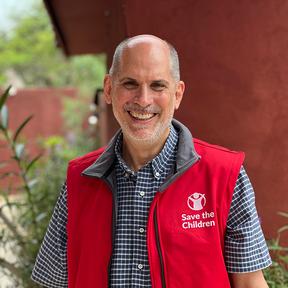
Conflict in DRC has created one of the world's largest displacement crises, with 5.6 million people, including at least 2.5 million children, displaced.
"Children are getting caught in the crossfire, and time is running out for them. Humanitarian access has been blocked to the already vulnerable populations."
- Greg Ramm, Save the Children's Country Director for DRC
What Happens When a Child Becomes a Refugee
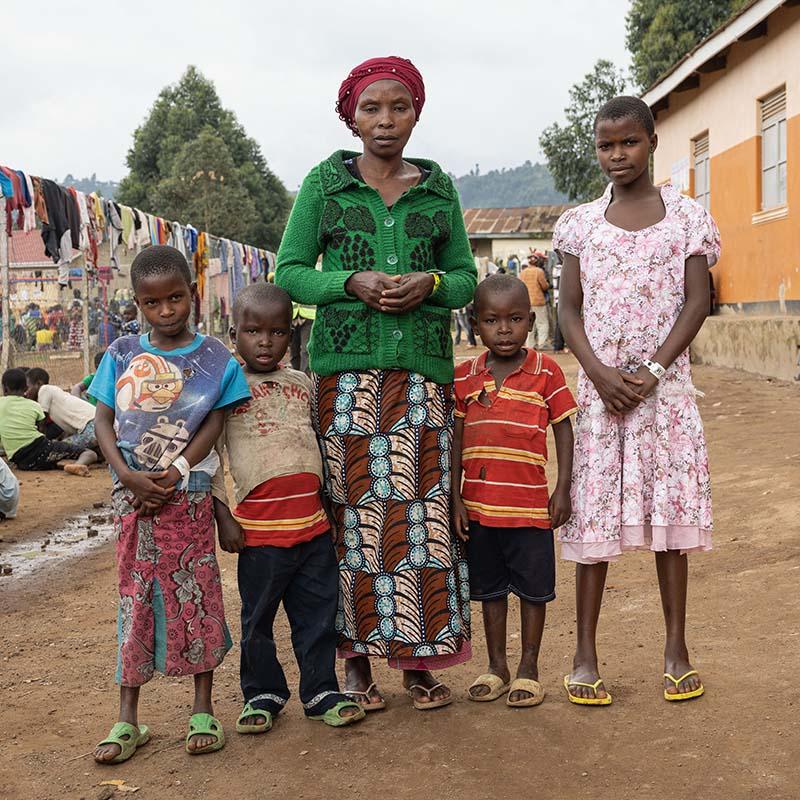
In Uganda, a mother and her4 children stand together at the reception center in new refugee settlement awaiting resettlement.
Eunice and her family were attacked in the night and were forced to flee their home in the DRC with nothing but the clothes on their backs.
"We fled to the forest, where we remained for two days before returning home. We ran and fled, but when we saw there was no peace, we were naked, hungry, and decided to seek refuge where we could be helped and fed. That’s how we ended up fleeing here."
Eunice and her four children reached the Ugandan border and made their way to the Transit Centre, which registers refugee arrivals.
At the Transit Centre, Save the Children runs a Child Friendly Space, a place for children to play and to begin to deal with some of what they’ve been through.
Eunice and her family relocated to a refugee settlement after two weeks at the transit center. Her daughter Amhale looks forward to the future. “I think [the camp] will be good. I will go to school. If we find a place to bounce a ball, we’ll play.”

Save the Children has a proven track record of using donations efficiently and effectively to change children's lives. We are proud to have received an A- rating from CharityWatch and a 4-star rating from Charity Navigator, the highest score possible from America’s leading independent charity evaluator.
This recognition reflects our long-standing commitment to ethical governance, transparent operations, and fiscally responsible use of donor support.
What is a child refugee?
A child refugee is a minor who is seeking a safe haven after being forced to flee violence, persecution or war.
Refugees are defined and protected in international law. And seeking asylum is not a crime. While every refugee is initially an asylum seeker, not every asylum seeker will ultimately be recognized as a refugee. Like all refugees, child refugees cannot safely return home and need international protection.
Many refugee children face disruptions to their education, health care and support systems, making them especially vulnerable during displacement.
Where do most refugees live?
Contrary to common misconceptions, most refugees do not live in wealthy countries. About 71% of refugees are hosted by low- and middle-income countries, often neighboring the countries they fled. Many refugee families remain close to home, hoping conditions will improve so they can one day return safely.
Which countries produce the most refugees?
Nearly two-thirds of refugees under UNHCR's mandate originate from just five countries. As of 2025, some of the largest refugee populations come from countries experiencing ongoing conflict and instability, including:
Afghanistan
Syria
Sudan
Ukraine
Democratic Republic of the Congo
These crises have forced millions of children and families to leave their homes in search of safety.
What are refugee camps and why are they created?
Refugee camps are temporary settlements created to provide refugees with immediate aid and protection.
Forced from home, refugees are often left with little to call their own. Lacking food, clean water, clothing and proper hygiene supplies, refugee children and their families are vulnerable to disease, abuse and worse.
There are refugee camps all over the world. Some of the largest refugee camps in the world include:
- Bangladesh
- Uganda
- Kenya
- Jordan
- Tanzania
- Ethiopia
What rights do refugees have?
Refugees have fundamental rights under international law, including the right to seek safety from persecution and conflict. They should have access to protection, basic services and fair asylum procedures.
Refugees also have the right to be treated with dignity and should not be returned to a country where their lives or freedom would be at risk.
How many child refugees are there in the world
Half of the global refugee population, nearly 13 million, are children below the age of 18.
What challenges do refugee children face?
Refugee children often face significant challenges before, during and after displacement. Many are forced to leave behind their homes, schools and communities. During their journeys, families may encounter hunger, lack of shelter, unsafe conditions and barriers at borders.
After arriving in a host country, refugee children may struggle to access education, health care, legal protection and opportunities to reunite with family members.
Despite these challenges, with the right support, refugee children can recover, learn and build brighter futures.
Are refugees legally allowed to work?
In many countries, refugees can legally work, although access varies depending on national laws and policies. Employment opportunities are often critical for helping refugee families support themselves and rebuild their lives.
Research shows that access to legal status and the right to work are among the most important factors influencing whether refugees can successfully integrate into their host communities.