
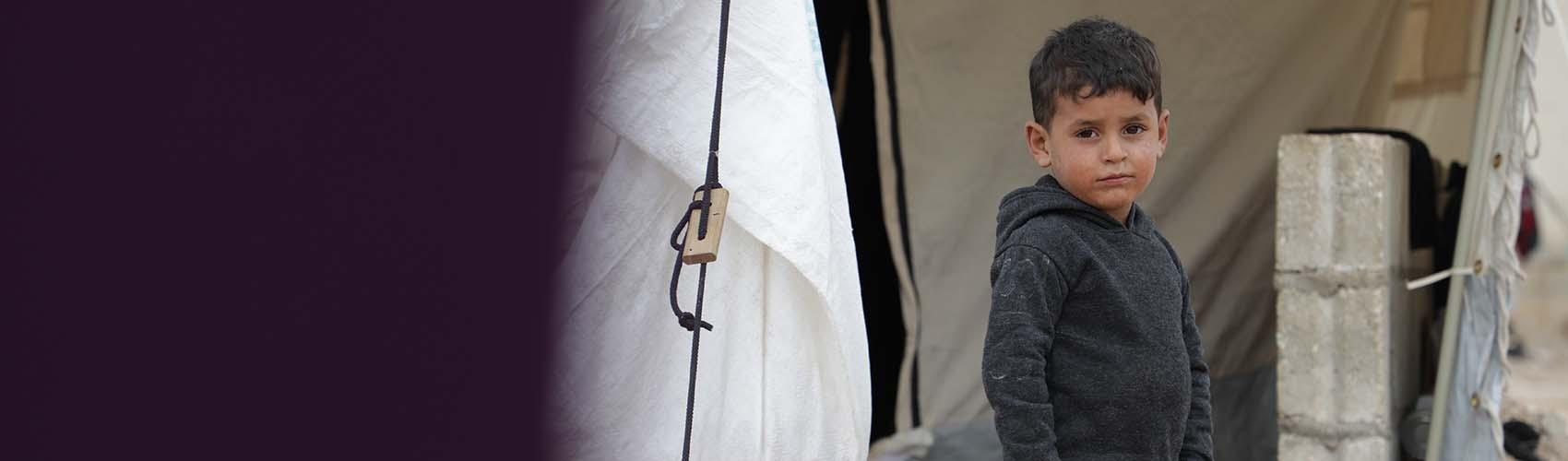
Escalating Conflict in the Middle East Region Has Triggered a Rapidly Expanding Crisis with Devastating Consequences
- Over 100 million children live in the countries affected by the violence.
- Conflict has spilled over to more than a dozen countries—and may continue to spread.
- Your donation can help provide lifesaving assistance—food, healthcare, and protection—for up to 2.6 million people.
Your gift to the Children’s Emergency Fund today ensures we can respond immediately wherever children are most at risk, both in the Middle East and around the world.

In Lebanon, nearly 700,000 people, including over 200,000 children, have been displaced.

Save the Children has 9 active responses across the region.

More than 300 children have now been reported killed in under two weeks of escalating conflict.
What Is Happening in the Middle East Region?
Active hostilities including airstrikes, missile attacks and drone strikes continue across the region.
As of March 5th, the following 16 countries are directly impacted by the hostilities that escalated on February 28: Iran, Lebanon, Israel, Syria, Iraq, Gaza and the West Bank, the United Arab Emirates (UAE), Bahrain, Cyprus, Kuwait, Oman, Qatar, Saudi Arabia, Türkiye, Azerbaijan and Jordan.
Many children in this region have already endured years of violence, displacement and insecurity.
This conflict has arrived without warning during the holy month of Ramadan. The disruption to Ramadan routines adds a particular layer of distress for children and families.
Children across the Middle East and the wider region are facing traumatic experiences as the current escalation unfolds.
Our Response to the Middle East Regional Crisis
Save the Children is focused solely on protecting children and civilians. We call on all parties to immediately cease hostilities and ensure that children, schools and hospitals are never targets. We will continue to:
Monitor potential threats to children and families where we are already responding to humanitarian needs, which includes Afghanistan, Gaza and the West Bank, Iraq, Lebanon, Pakistan, Syria, Turkiye and Yemen.
Distribute child-focused supplies to displaced families, including hygiene kits, mattresses, blankets, and other essentials.
Advocate for children’s safety and rights.
Speak out when children are harmed or at risk.
Do whatever it takes to help ensure every child has the chance to survive and have a future.
Respond to the needs of children and families impacted by airstrikes where we work.
Helping Children Cope with Conflict and Fear
Children exposed to violence — whether directly or through the news — may feel anxious, confused or afraid. Parents and caregivers often struggle to find the right words when children ask difficult questions.
Save the Children’s child protection experts recommend:
- Encouraging children to share their feelings and questions
- Listening calmly and reassuring them they are not alone
- Limiting exposure to distressing news coverage
- Maintaining routines to help children feel safe and secure
Find more tools and tips that caregivers can use to approach the conversation with children here.
Help Children Affected by the Escalating Middle East Crisis
Escalating conflict in the Middle East and wider region has triggered a rapidly expanding crisis with devastating consequences for children.
More than 300 children have been reported killed in under two weeks of escalating conflict, including at least 200 in Iran, 98 in Lebanon, four in Israel, two in Gaza, and one in Kuwait.
Over 100 million children live in the countries affected by the violence.
Many children are sheltering from attacks, with prolonged exposure to insecurity, sirens and explosions raising the risk of chronic emotional distress.
Your support can help provide life-saving assistance to children and families affected by this escalating crisis.
Updated: March 12, 2026