
10 Flood Safety Tips to Keep Children Safe
Floods are among the most frequent and costly natural disasters in the U.S. While the effects of floods can be devastating, these flood safety tips can help keep children safe.
What to do before a flood:
- Talk about floods. Spend time with your family discussing why floods occur and how to stay safe during a flood. Explain that flooding is a natural event and not anyone’s fault. Use simple words that young children can understand.
- Consider flood insurance. Standard homeowners insurance doesn’t cover flood damage.
- Stay informed. Use a NOAA Weather Radio or listen to a local station on a battery-powered device, radio or TV. Listen for what to do in a flood warning or watch. Evacuate if told to do so or if you feel unsafe.
What to do during a flood:
- Follow guidance of local authorities. Elected officials and first responders are most informed about affected areas and most knowledgeable which flooded areas to avoid.
- Move to higher ground. During a flood you should move to higher ground and avoid standing, flowing, or rising water.
- Keep children away from dirty water. Keep children and pets away from hazardous sites and floodwater as it’s likely to be dirty, carry bacteria, and vulnerable to electric shock.
- Keep children clean. Wash children's hands frequently (always before meals) and ensure they bathe after being exposed to flood waters or flood-damaged areas.
What to do after a flood:
- Ensure utilities are restored. Before children return to flood-affected areas, ensure utilities such as electricity and plumbing are restored. Living and learning spaces (e.g., homes, schools, child care facilities) should be free from physical and environmental hazards.
- Limit children’s participation in recovery. Children and teens should not be involved in clean-up efforts – they should return after the area is cleaned up. Before children return, these areas should be cleaned and disinfected, along with all toys, clothing, etc.
- Clean or discard contaminated toys. Do not allow children to play with toys that have been contaminated by flood water and have not been disinfected. Materials that cannot be readily disinfected, such as stuffed animals or pillows, should be discarded.
Our History of Flood Relief Response
With your help, Save the Children is working in the U.S. and around the world to help children and their communities adapt to the impacts of extreme weather, including floods.
2025 Washington State Floods
In 2025, Washington endured one of the most destructive flooding events in its history. Repeated storms, levee failures, and mass evacuations forced thousands from their homes, leaving families dependent on shelters and emergency assistance.
Working alongside partners, Save the Children launched a rapid response to support the state’s most vulnerable communities, including families in emergency shelters, people with pre‑existing vulnerabilities, and Native nation populations. As one of the first organizations on the ground, and in partnership with the American Red Cross and Amazon Disaster Relief, we provided emergency cash, essential supplies, and safe, child‑friendly spaces within shelters.
Our teams also supported childcare providers to help them reopen quickly, ensuring children had safe places to learn and play as recovery began.
2022 Eastern Kentucky Floods
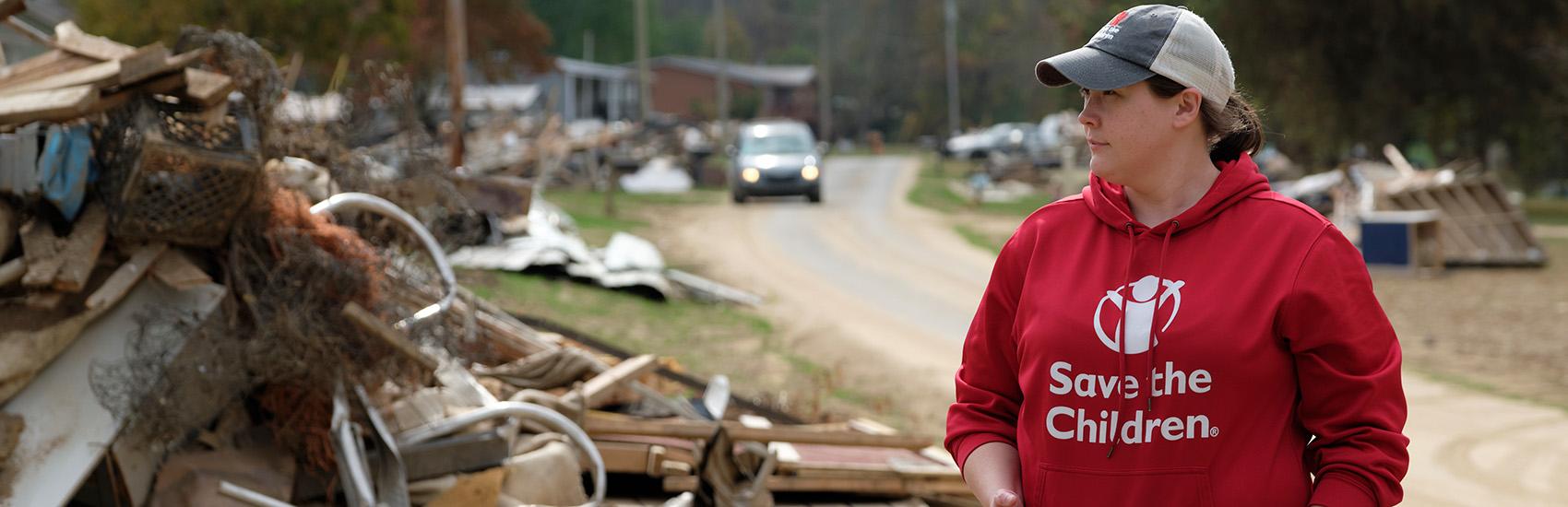
In July 2022, historic flooding in eastern Kentucky left a wake of destruction in its path.
Save the Children worked with school and community partners across six of the region’s hardest-hit counties to help schools and child care centers recover, and get children and families the essentials they need now and long-term, including social and emotional support to cope with stress and loss following the tragic flooding.

Save the Children has a proven track record of using donations efficiently and effectively to change children's lives. We are proud to have received an A- rating from CharityWatch and a 4-star rating from Charity Navigator, the highest score possible from America’s leading independent charity evaluator.
This recognition reflects our long-standing commitment to ethical governance, transparent operations, and fiscally responsible use of donor support.
These tips were developed by Save the Children’s emergency response and child protection experts, based on decades of experience supporting children in crises worldwide.
Clinically Reviewed by: Save the Children's Child Protection team | Written by: Save the Children Editorial Team| Last Reviewed: June 2026