
EMERGENCY ALERT
Winter Storm Fern is leaving widespread disruptions across much of the U.S., with dangerous cold, power outages and reports of multiple storm-related deaths as recovery efforts continue.
Save the Children's U.S. Emergency Team is mobilizing to provide emergency assistance to families most in need across the Mississippi Delta, Sevier County, Arkansas, and Dyer County, Tennessee.

Winter Storm Safety: 10 Tips for Keeping Kids Safe When the Extreme Cold Hits
Severe winter weather due to Winter Storm Fern continues to affect large parts of the country, causing prolonged power outages, hazardous cold and prompting ongoing emergency and recovery efforts. Please review the winter safety tips below and take steps now to protect yourself and your family.
Save the Children’s U.S. Emergency Team is working to meet the most urgent needs of children in areas hardest hit by Winter Storm Fern.
If a Winter Storm Is Happening Right Now:
- Stay indoors and follow guidance from local authorities and weather alerts
- Avoid unnecessary travel, especially with children, during whiteout or icy conditions
- Keep children dressed in dry, warm layers, even indoors if heating is limited
- Use only safe heating sources and keep space heaters away from children
- Keep emergencies supplies like batteries within reach and make sure smoke detectors are working
- Keep children in one warm room to conserve heat during winter storm power outages
Here are 10 Extreme Cold Safety Tips to Protect Children:
Extreme weather conditions and events, like record-low temperatures, can threaten children’s lives and disrupt infrastructure critical to children’s well-being. Power-outages due to cold weather can create even more challenges for staying safe and warm.
Here, our emergency response experts share winter safety tips to help children stay safe, whether you're staying indoors or weighing the risks of outdoor winter activities.
- Layer up! Bitter cold and snow can cause frostbite. Dress your child in several layers, and make sure their head, neck and hands are covered. Dress babies and young children in one more layer than an adult would wear.
- Play it safe. Even when roads are closed to traffic, it’s not safe to play or sled in the street. Visibility may be limited due to snowbanks and ice on the roads makes braking difficult.
- Beware of clothing hazards. Scarves and hood strings can strangle smaller children so use other clothing to keep them warm.
- Check in on warmth. Before kids head outside, tell them to come inside if they get wet or if they’re cold. Then keep watching them and checking in. They may want to continue playing outside even if they are wet or cold.
- Use sunscreen. Children and adults can still get sunburned in the winter. Sun can reflect off the snow, so apply sunscreen to exposed areas.
- Use caution around fires. Wood-burning stoves, fireplaces and outdoor fire-pits are cozy but can present danger – especially to small children. Use caution and put up protective gates when possible. If you’ve lost power or heat and are alternative heating methods like kerosene or electric heaters, be sure smoke detectors and carbon monoxide detectors are working.
- Get trained and equipped. Children should wear helmets when snowboarding, skiing, sledding or playing ice hockey. And to avoid injuries, teach children how to do the activity safely.
- Prevent nosebleeds. If your child suffers from minor winter nosebleeds, use a cold-air humidifier in their room. Saline nose drops can help keep their nose moist.
- Keep them hydrated. In drier winter air kids lose more water through their breath. Offer plenty of water, and try giving them warm drinks and soup for extra appeal.
- Watch for danger signs. Signs of frostbite are pale, grey or blistered skin on the fingers, ears, nose, and toes. If you think your child has frostbite bring the child indoors and put the affected area in warm (not hot) water. Signs of hypothermia are shivering, slurred speech, and unusual clumsiness. If you think your child has hypothermia call 9-1-1 immediately.
Save the Children's Response
Save the Children’s U.S. Emergency Team and local staff in Arkansas, Mississippi and Tennessee are mobilizing to deliver critical emergency funding assistance to families most in need, to help them quickly cover urgent costs, including food and water, heating and warming supplies, and lost income due to the storm.
Save the Children has extensive experience responding to severe winter weather, including Winter Storm Uri in 2021, when prolonged power outages and system failures disproportionately affected families with children. If conditions warrant, Save the Children is prepared to support families —particularly in hard-to-reach communities where children's needs are most likely to go unmet.
As extreme temperatures leave many vulnerable families living in poverty with less food, less clean water, lower incomes and worsening health, Save the Children is working to help communities prevent, prepare for and recover from extreme weather disasters.
Your donation to the U.S. Children's Emergency Fund helps our teams response before, during and after crisis strikes.
FAQs
How has Winter Storm Fern impacted the United States?
A powerful winter storm blanketed much of the eastern U.S. with snow, sleet, and freezing rain, knocking out power to over a million customers and prompting emergency declarations in at least 12 states.
Sub-zero Arctic cold from the Plains to New England strained energy supplies and placed 118 million people under winter storm warnings, with widespread disruptions expected.
Hundreds of school districts from Central Texas and the Midwest to the Northeast canceled classes or closed buildings on Monday, impacting millions of students due to dangerous snow and extreme cold.
What are signs of frostbite in children?
According to the CDC, frostbite is a cold-weather injury that happens when skin and underlying tissues freeze. Early signs can include skin that turns pale, grayish-yellow, feels firm or waxy, and may be numb.
These symptoms often affect extremities like fingers, toes, ears, nose and cheeks. If you suspect frostbite, bring the child indoors and warm the affected area with warm — not hot — water, and seek medical care if symptoms persist.
How do you keep children warm during power outages?
Dress children in layers, use blankets, and keep them in one warm room if possible. Never use grills, generators or fuel-burning devices indoors. Make sure smoke detectors and carbon monoxide detectors are working during any power outage.
How cold is too cold for kids to play outside?
There is no single temperature that is safe for all children. Factors like wind chill, humidity, clothing and how long a child is outdoors all matter. In extreme cold or during winter storm warnings, children should stay indoors whenever possible to reduce the risk of frostbite and hypothermia.
What should parents or caretakers do if a winter storm is happening right now?
Follow local emergency alerts, keep children indoors when advised, avoid unnecessary travel and check on children often for signs of cold exposure. Families should prioritize safety and avoid outdoor play during severe winter weather conditions.
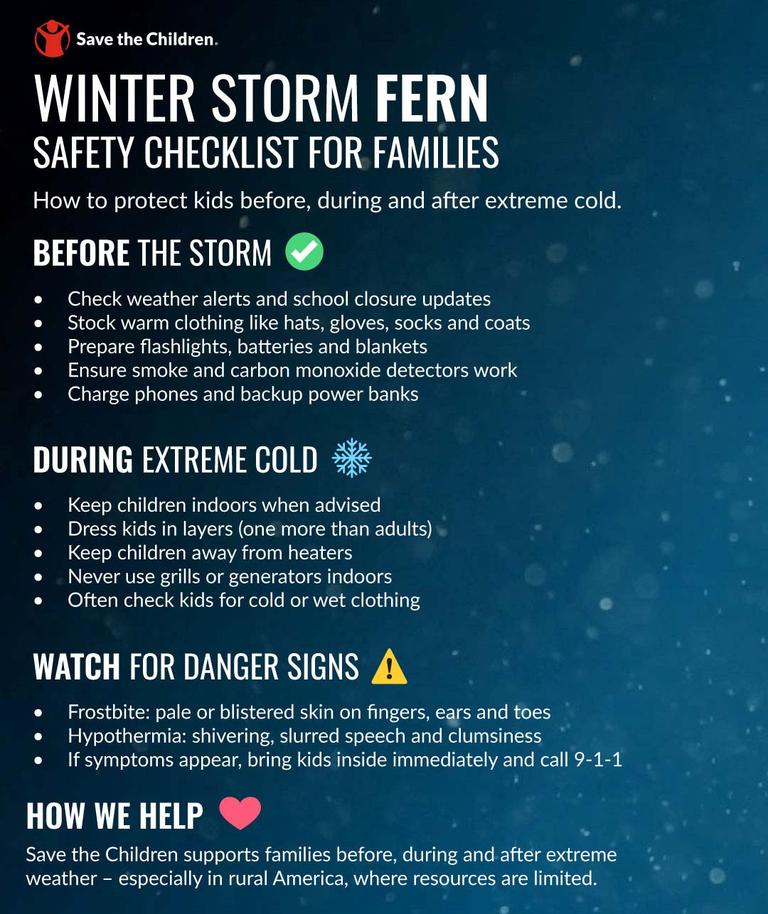
An infographic with a checklist for how families can keep children safe during a winter storm.
Last updated: January 28, 2026 | This guidance is updated for the current winter season as extreme cold and snowstorms affect communities across the U.S.